
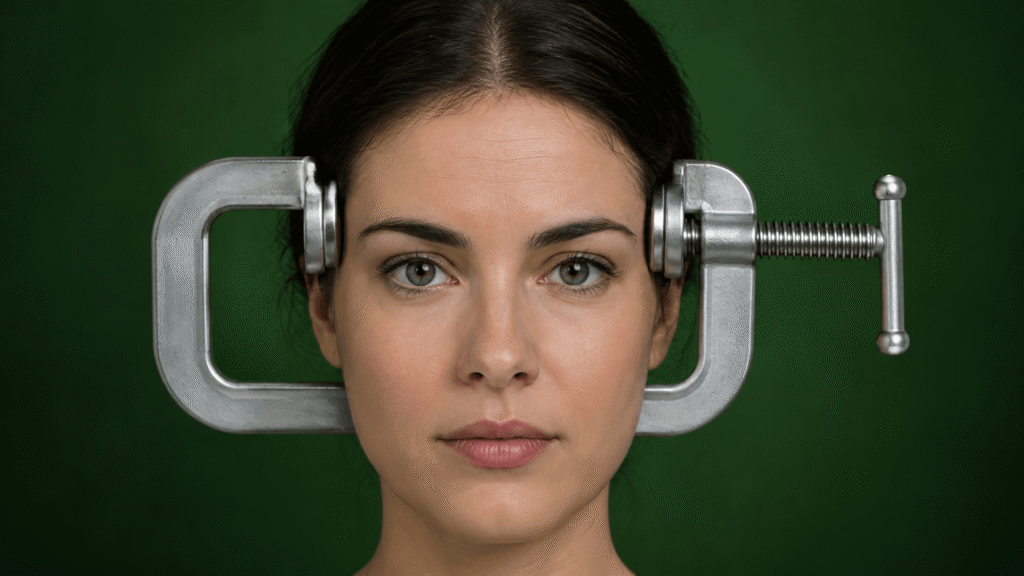
Today, we have to break one of our own rules. Yes, yes… You didn’t know this no-holds-barred newsletter operated by any rules, right? It turns out we do, and one of our core rules is: Avoid Medical Jargon. In order to do justice to today’s topic, we have to break that rule. We’ll do our best to keep things simple wherever we can, though.
September is IIH Awareness Month. Insert blank stare here…
You’ve never heard of IIH before, right? It stands for Idiopathic Intracranial Hypertension.
“Idiopathic” has nothing to do with politicians. It is medical jargon for “We don’t know what causes it.” “Idiopathic” just sounds so much grander than “I don’t know”, doesn’t it? Next time your spouse asks who forgot to replace the toilet paper, just say, “Idiopathic” (we’ll come visit you in hospital).
“Intracranial” means “inside the skull”.
“Hypertension” means “elevated pressure”.
String it together and you get “Increased pressure of unknown origin inside the skull.”
Now you know why everyone prefers to talk of IIH instead.
What Is IIH?
The brain floats in a sea of liquid called cerebrospinal fluid, or CSF for short. Under normal circumstances, this fluid is under some pressure. This is referred to as “intracranial pressure”. This pressure varies a little due to various factors. However, when this pressure goes too high, there are several knock-on effects. The most noticeable is a severe, enduring headache that does not respond adequately to painkillers.
There are two basic reasons why intracranial pressure increases. Either too much fluid is produced, or too little of this CSF is reabsorbed into the body.
These disturbances may be caused by known agents (we look at some below), but mostly no reason can be found despite many (and invasive) investigations. In such a case, IIH is diagnosed.
IIH used to be called pseudotumor cerebri (= “fake brain tumour”) since it often presents like a brain tumour. More common causes of raised intracranial pressure include structural, vascular or infective causes. Other types of severe headache, like migraine, tension headache and cluster headaches, usually have a fluctuating pattern, while the IIH headache is more constant in nature. If other causes have been ruled out, IIH is top of the list. In other words, it is a diagnosis of exclusion.
To diagnose IIH, raised intracranial pressure must be demonstrated (lumbar puncture), CSF composition must be normal and brain scans must show no mass lesion, hydrocephalus or meningeal abnormalities.
Why You’ve Never Heard Of IIH
OK, so this is IIH Awareness Month, and it is needed because so few people are aware of this condition. But why have so few people heard of it?
Short answer: It is rarely diagnosed. In the general population, only about 1 in 100,000 people are diagnosed with it every year. That’s even rarer than a 5c coin…
On the other hand, numbers are increasing (more about that below). And since it is treatable and may lead to vision loss, there is reason to increase awareness so people are not harmed by it.
Why IIH Matters
It matters clinically far beyond its modest incidence because it threatens vision. IIH is a preventable cause of blindness. If left untreated or poorly monitored, papilledema progresses to optic nerve atrophy and permanent visual loss. This occurs in ~10 – 25% of patients.
Who Is Most Affected?
Distribution is strikingly uneven.
• Among adults aged 20–50, the female-to-male ratio is 8:1, with peak incidence in the twenties and thirties.
• In children below 12 and in adults over 50, the ratio is 1:1.
• Obesity: This is the dominant risk factor. Among obese women aged 20-44, incidence rises to roughly 15-25 per 100,000 per year. Even modest recent weight gain increases the risk, not just outright obesity, but the more the weight gain, the higher the risk.
The uneven age and sex distribution strongly suggests a hormonal component to IIH. No specific hormone(s) have yet been pinpointed. Considering that obesity also plays such a prominent role, it is likely that insulin is more to blame than oestrogen or progesterone, but there is no science to support this hypothesis. Clearly there are other factors at play, since only a tiny fraction of obese adults present with IIH.
The IIH trend over time has risen sharply, most likely due to the obesity epidemic. A Welsh population study documented a 5-fold increase over a 15-year period. Children and adolescent cases are increasingly affected, too.
What Makes IIH Worse?
We’ve mentioned obesity as a comorbid factor, but there are other factors that also worsen matters in patients with IIH.
Vitamin A
Vitamin A and its derivatives (such as the anti-acne medication isotretinoin) are well known to increase intracranial pressure. Taking vitamin A supplements should be avoided.
Medication
Tetracycline-type antibiotics (most notably minocycline and doxycycline) increase intracranial pressure.
Long-term corticosteroid medication increases intracranial pressure, as does rapid corticosteroid withdrawal.
Lithium carbonate, used to treat bipolar depression, increases intracranial pressure (rare).
The heart medicine amiodarone worsens IIH symptoms.
Hormones
Growth hormone (whether due to a growth spurt or administered as medication) and thyroid hormone therapy are known to worsen symptoms of IIH.
Insulin levels were significantly higher in adult women with IIH compared to controls, although the exact correlation remains unclear. (Link)
Other medical conditions
Polycystic ovary syndrome (PCOS), obstructive sleep apnoea (OSA), hypothyroidism, renal failure and lupus are all known to worsen symptoms.
Morphology
It is highly likely that macromastia (oversized bre*sts) contributes to IIH severity, but no studies or reports exist as yet.
A Hidden Cause Of Raised ICP?
Cerebral venous sinus stenosis is common in IIH but remains disputed as a cause versus consequence.
What Are The Diagnostic Criteria Of IIH?
The modern consensus criteria require:
• Papilledema (an ocular sign of high ICP)
• Normal neurological examination (apart from cranial nerve abnormalities)
• Normal neuroimaging of the brain
• Normal CSF composition
• Elevated intracranial pressure of at least 250 mm H₂O in adults
Note: Neuroimaging may show supportive but non-diagnostic features: an empty sella, flattened posterior globes, distension of the optic nerve sheaths and transverse sinus stenosis.
What Are The Signs and Symptoms Of IIH?
• Papilledema is the cardinal sign and the reason the condition is dangerous if left untreated. It is usually bilateral but may be asymmetric or, rarely, unilateral. Visual field loss typically begins as an enlarged blind spot, progressing to peripheral constriction and visual defects.
• Headache is the most common symptom, affecting roughly 80 – 90% of cases. Headaches are typically daily and bilateral, often behind the eyes, worse on waking and worse with Valsalva manoeuvres such as coughing or straining. In character, the headache resembles migraine. Headaches often persist even when the ICP normalises.
• Transient visual obscurations occur in around 60 – 70% of cases. These are brief (seconds-long) episodes of greying or blacking out of vision, often triggered by postural change. They are not in themselves a marker of permanent damage, but they signal ongoing pressure.
• Pulsatile tinnitus. This is a “whooshing” sound, synchronous with the pulse, and frequently unilateral. It is reported by around 60% and is often one of the earliest symptoms.
• Diplopia occurs in a minority, usually from a sixth cranial nerve damage involving the third, fourth, and seventh nerves.
• Photophobia, retrobulbar pain, neck and radicular pain, dizziness, nausea and subjective cognitive complaints are all recognised symptoms.
• Focal neurological deficits are not a feature – their presence should prompt reconsideration of the diagnosis.
Other Causes Of Raised ICP
There are many other conditions in which raised ICP forms part of the symptom complex. Before a diagnosis of IIH can be made, these must be excluded. Listing them all here falls beyond the scope of this post, but here are some of the more common conditions.
Cardiovascular
Many causes, some due to genetic factors (Down syndrome) and others due to birth defects. Sometimes, post-surgery or post-trauma complications may cause vascular defects, leading to raised ICP. Any situation that prevents blood from leaving the brain will raise ICP.
Hydrocephalus
This typically develops when the flow of CSF is obstructed. It can be overt or covert, sometimes taking decades to diagnose. Other causes involve overproduction of CSF.
Space-occupying lesions
Since the cranial cavity is surrounded by bone, there is no room for anything other than the brain. Tumours, cysts, abscesses and bleeds can crowd the space, leading to raised ICP. Of these, some are particularly important in the South African scene:
– Cysticercosis: Cysts from parasites such as the tapeworm are far more common than is commonly recognised.
Infections
– Cryptococcal meningitis: Often found in HIV/AIDS patients, very common in South Africa.
– Tuberculous meningitis: Fairly common in South Africa.
– Other infections: Bacterial meningitis, Lyme’s Disease and many others.
Immune-related conditions
Many forms of brain inflammation will raise ICP. As such, auto-immune conditions are commonly associated with IIH-like symptoms (including sarcoidosis, Sjögren’s syndrome, SLE and many others).
Blood-related
The most common IIH mimicking condition in this category is iron deficiency anaemia, especially in children. Replacing the iron deficiency resolves the severe headaches.
Hyperviscosity of the blood and many other blood disturbances (including porphyria and leukaemia) may also induce IIH-like symptoms.
Hormone-related
– Low thyroid or parathyroid function often mimics IIH.
– Low calcium levels.
– Adrenal gland insufficiency
– Pregnancy: Increased blood viscosity.
– Pre-eclampsia and eclampsia in pregnancy.
– Postpartum clotting events.
Medication-related
– Corticosteroids: Initiating high-dose therapy and withdrawing therapy may both produce IIH-like symptoms.
– Isotretinoin and tetracycline anti-acne treatments.
– Opioid medication overuse may raise ICP.
– Vitamin A supplements
Vitamin-related
– Vitamin A deficiency in children (paradoxical).
– Vitamin D deficiency.
Metabolic-related
– Mitochondrial defects.
– Diabetic ketoacidosis, especially in children (treatment-related).
– Anorexia nervosa and refeeding.
– Kidney failure (acute or chronic)
– Heat stroke.
Oxygen related
Any condition that lowers oxygen and increases carbon dioxide in the blood will increase ICP. Mostly, this increase will not be marked, but if the condition is severe, IIH-like symptoms may result.
– Obstructive Sleep Apnoea (OSA): If you’re snoring, chances are you’re suffering from OSA. This is a very common cause of raised ICP. It is estimated that between one third and two thirds of patients diagnosed with IIH also suffer from OSA. Part of the reason may be that OSA interferes with REM sleep, which is needed to clear waste from the brain.
– COPD (“smoker’s lung”): Typically results in severe early morning headaches.
– High altitude (“mountain sickness”).
Various
– Post-epidural or post-lumbar puncture increase in ICP may occur.
– Chronic migraine: In cases of daily or almost daily migraines, IIH may be the more correct diagnosis, but there are overlaps in the conditions.
– Tension headaches: Also linked with raised ICP.
– Fibromyalgia / chronic fatigue: Limited evidence.
The Treatment Of IIH
Weight Management
Weight management is the cornerstone of treatment. A sustained loss of 5 – 10% of body weight produces meaningful improvement in papilledema and visual fields. Sadly, in allopathic medicine, this means bariatric surgery. It is now accepted as the best way to manage weight in IIH, even being advised for children. The fact that there are serious, lifelong and irreversible side effects to bariatric surgery does not seem to stop it from being promoted. Nowadays, GLP-1 agonists may also be prescribed, although no studies in IIH have yet been done.
Medication
Acetazolamide is the first-line medicine for IIH. Typically, doses of 500 – 4,000 mg daily are prescribed in divided doses. It reduces CSF secretion, thus lowering ICP. The Idiopathic Intracranial Hypertension Treatment Trial established that acetazolamide plus a low-sodium weight-loss diet improved visual field function, reduced papilledema grade and improved quality of life compared with diet alone. Dose-limiting side effects included gastrointestinal disturbance and paraesthesia (pins and needles).
Over the long term (6+ months), acetazolamide use induces bone demineralisation and bicarbonate depletion. It is recommended to take a potassium supplement, since this drug depletes potassium from the body. Taking a sodium citrate supplement helps manage acid levels.
Topiramate is a reasonable alternative or adjunct, since it also inhibits the same enzyme and promotes weight loss to boot. Cognitive side effects can be troublesome, though.
Furosemide and methazolamide are used less often.
Surgery
Surgical options are reserved for deteriorating vision or refractory headache.
– Optic nerve sheath fenestration protects vision but often does not relieve headache.
– CSF shunting (ventriculoperitoneal or lumbo-peritoneal) relieves both pressure and headache, but revision rates are high.
– Venous sinus stenting is increasingly used in patients with a demonstrable pressure gradient across a stenotic transverse sinus, with favourable outcomes reported in selected cases.
– Repeated lumbar puncture offers only temporary relief.
Monitoring IIH
Serial perimetry and optical coherence tomography are essential for monitoring, alongside fundoscopy. Headache should be managed on its own merits with standard agents. Avoid opioid medications, though, due to the great risk for dependence.
What’s The Outlook For Those With IIH?
With timely diagnosis, effective weight management and appropriate medical or surgical therapy, the majority of patients retain good vision. How quickly visual compromise is detected and how consistently it is monitored has a major influence on the long-term outcome.
Unfortunately, headache frequently outlasts the raised pressure itself, and many patients require long-term multidisciplinary care for this.
Alternative Approaches To IIH
Diet
Going on a ketogenic or carnivore diet, with a high intake of saturated fats and animal protein, will help drop insulin levels and excess weight. Reducing the number of meals to one or at most two per day (18- or 23-hour fasting window, during which only water is taken) will further help induce a ketogenic state. Once the brain is burning mainly ketones, symptoms are likely to soften.
Lifestyle
Zone 2 exercise (e.g., walking while maintaining the heart rate below 100 bpm) also helps with the circulation of CSF and should soften symptoms, despite a lack of studies on this topic. Grounding (earthing) may also be of benefit.
Supplements
No studies on the benefits of supplements in IIH have ever been published to date. However, we can make some educated guesses as to what may be useful.
Vitamin D: It is a well-established fact that patients with IIH are more likely to have low vitamin D levels. There is no evidence that normalising vitamin D levels will reduce or reverse symptoms of IIH, though. We recommend that everyone (healthy or otherwise) should aim at a vitamin D level in excess of 60 ng/ml, preferably closer to 80 ng/ml. Patients with IIH are no exception to this recommendation, especially since inflammation is implicated in IIH.
Magnesium: On the one hand, low magnesium levels increase inflammation and increase insulin resistance. As such, supplementation may be of some benefit. On the other hand, there are fears that too much magnesium may increase brain blood flow and thus worsen ICP. The latter fear has not been proven in research, though. We recommend modest magnesium supplementation as well as Brain-Mag (magnesium-L-threonate), which feeds the brain.
Omega-3 (EPA/DHA): These oils are well-known for their anti-inflammatory effects. In animal studies investigating traumatic brain injury, omega-3 fatty acids reduced brain swelling. They may thus bring some relief (and they won’t do any harm).
Curcumin: This component of turmeric root reduced brain swelling and aquaporin-4 expression in rodent models of brain trauma. Aquaporin-4 is a specialised protein that lets water pass across cell membranes while blocking other molecules. It can do no harm to try it. Our Liposomal Curcumin is super-bioavailable, meaning one or two capsules are all that is needed for a clinical effect.
Creatine: A small study showed that creatine has neuroprotective properties in children after brain trauma. No evidence that it lowers ICP, but also safe to test.
Melatonin: This sleep hormone has important effects on CSF flow, as well as waste clearance from the brain. Considering that melatonin production is likely suppressed in cases of raised ICP, a case for melatonin supplementation can be made. It can do no harm to try it.
Vitamin B1: This vitamin plays a critical role in many brain processes. Being water soluble, it has trouble crossing the blood-brain barrier. Thus, it is very likely to be in short supply inside the brain when ICP is high. There are a number of possible mechanisms by which vitamin B1 supplementation may be neuroprotective in IIH. Since it is non-toxic even in very high doses, we recommend that it be tried. Doses of 500 mg / day may initially be needed to overcome the deficit.
DMSO: Dimethyl sulfoxide (DMSO) is an old remedy for brain trauma. Some animal case reports indicate that oral dosing may reduce ICP. No human data exists. Taking DMSO orally causes a garlic body odour in some users, which can be highly unpleasant for those around them.
Glycerol (oral): Strictly speaking, it is not a supplement, but it is a non-prescription product. It works as an osmotic agent, meaning it sucks water into the gut. This reduces the amount of water in the blood, which, in turn, lowers pressure in the brain. Historically, glycerol has been used for brain swelling. No clear benefit has been demonstrated in studies, though.
Things To Avoid
High-dose vitamin A / retinol / cod liver oil
Hypervitaminosis A is a recognised cause of intracranial hypertension. Vitamin A precursors may be present in some cosmetic products.
Tetracyclines
Tetracycline-containing acne regimens (doxycycline or minocycline) are classic secondary IIH triggers.
Medications
Levonorgestrel and high-dose oestrogen medication, as well as growth hormone and lithium carbonate, are all linked to secondary intracranial hypertension.
Liquorice
A substance in liquorice may cause fluid retention if liquorice is used in excess.
In Summary
IIH is likely far more common than is currently being recognised. Doctors and even specialists are often unaware of this condition, resulting in long delays before a diagnosis is made. It is also very likely that a much larger subset of patients with moderately raised ICP exists, where the ICP is not high enough to warrant a diagnosis of IIH but still high enough to cause downstream damage. It thus pays to eliminate potential causes of raised ICP from your daily life, for the sake of your long-term health.
To your (pressure-free) health
The Team at Integrow Health

