
We’re living in uncertain times. Come to think of it, we’ve been living in uncertain times forever and a day. Uncertainty is a given. Your response to uncertainty is learned. You can choose whether you allow uncertainty to freak you out, or whether you stare at it until it breaks down and cries.
Right now, a new uncertainty has entered the media menu of “Things To Freak Out About”. It’s called the Energy Crisis and it promises to cripple your budget or your car. Look at it this way: You still have a car. So do most of your friends, family members and work colleagues. We can make some clever plans and maybe even have some fun while executing those plans.
Six years ago, we were settling down for “Two weeks to flatten the curve.” Talk about uncertain times. We were never certain whether it was legal to smoke or not, drink alcohol or not, buy baby clothes or not (remember THAT idiocy?). We were uncertain when it was legal to have a haircut and when it was legal to touch beach sand with your bare feet. Uncle Cyril kept us dear fellow South Africans entertained with regular messages of ever greater uncertainty.
Most of us survived those times. Some freaked out. Some got COVID. Overall, however, we bounced back better to the “new normal” of corrupt politicians.
Keep a sense of humour (and a few spare rolls of toilet paper).
This is not the time to let go of your health!
When the going gets tough, you better be in the best health you can manage. One of the biggest complaints we hear every day from our customers is, “I feel so tired!”
Now is an excellent time to fix that personal energy crisis. You want to be in peak physical and mental shape when the rest of the world is freaking out. Anti-freakers will rule the world!
Most diseases have energy deficiency as a major contributor to the symptom burden.
* Cancer is an energy deficiency disease.
* Diabetes Type 2 is an energy deficiency disease.
* Obesity is an energy deficiency disease.
* Heart failure is an energy deficiency disease.
* AIDS is an energy deficiency disease.
* All neurological disorders are energy deficiency diseases.
* Psychiatric disorders are energy deficiency diseases.
* Ding dong dysfunction is an energy deficiency disease.
Have we got your attention?
Forget the global energy crisis. This energy crisis is close and personal.
We all know the feeling of “hitting the wall.” In fact, if you don’t, you’re adulting all wrong. Adulthood comes with Chronic Fatigue 1.0 pre-installed.
So, you’re doing everything “right” – eating clean, sugar-free, exercising, sleeping enough, taking your supplements – but you still have those energy slumps, brain fog and those puzzling moments when your mood just dips for no good reason. Surely there must be more to life than this?
Vitamin B8: The Alternative Energy Source
You’re flipping through those mental files, trying to recall if you ever heard about Vitamin B8. Blank.
“Siri…”
Vitamin B8 is what scientists used to call a sugar now better known as inositol (“Ay-NOSS-ee-TOLL”).
Pubmed lists 52,929 research articles on this “hidden” vitamin. Most of that research was done in the past 40 years.
Remember that inositol does not have a Big Pharma budget behind it. Almost all this research was conducted using grant money. If scientists are focusing so much energy on this topic, it must be important, not so?
What Is Inositol (Vitamin B8)?
Inositol is a naturally occurring sugar alcohol that resembles simple sugars and plays a crucial role in cell membrane structure and insulin signalling. Often referred to as “vitamin B8,” it is produced by the human body from glucose. It is also found in foods like fruits, beans, grains and meat.
There are nine possible subtypes of inositol, but only two are biologically relevant to us. Myo-inositol is the most common and widely studied form.
Is Inositol A Vitamin?
A vitamin is an essential, non-mineral substance that is not produced by the human body and thus needs to be ingested via the diet. Absence in the diet must lead to a clearly defined deficiency disease.
Based on this definition, inositol is technically not a vitamin, although it was initially thought to be one. Most of the body’s inositol is produced in the kidneys, with smaller amounts produced by the liver, brain and gonads. From here, it is distributed throughout the body, since all cells need it.
A typical healthy young adult may produce 4g of inositol per 24 hours. This amount decreases with age, mainly as kidney function decreases.
How Does Inositol Work?
* Inositol improves insulin sensitivity
This is no small deal. By helping insulin move glucose into cells, there is less glucose in the blood (a good thing) and more glucose inside cells, especially brain and muscle cells (a very good thing).
* Inositol balances brain hormones
By increasing glucose inside brain cells (neurons), they have more energy to do the work they are supposed to do. This includes the production of neurotransmitters like serotonin and dopamine. This leads to a sense of calm and focus.
* Inositol restores gonadal function
By allowing more glucose to enter the gonads, they are empowered to do their work better. In women, this means sorting out the ovaria, balancing female hormones and restoring fertility. In men, it means increased testosterone production and healthy sperm production. Essential in any fertility toolkit.
What Are The Benefits Of Inositol (According To Science)?
* It improves thinking, memory and attention span.
* Inositol improves mood and emotional balance.
* It relieves depressive symptoms. (Link)
* It improves insulin sensitivity (a BIG deal for stable energy supply).
* It treats PCOS (polycystic ovarian syndrome) (Link)
* It treats ding dong dysfunction in men (Link)
So Why Haven’t You Heard Of It?
In short: Inositol cannot be patented. No one is ever going to get rich on inositol alone. There were other, patentable substances waiting to be discovered. Inositol research continued in background, but study results rarely attracted media attention.
And yet… those who try it are blown away by the results.
After Just One Week Of 5g Inositol Daily…
✅ Your morning focus will sharpen – no dragging yourself out of bed.
✅ Your afternoon “crash” will disappear.
✅ You will feel… lighter. happier.
Tell Me More About Inositol As A Supplement
* Pleasantly sweet powder. Easy to get into kids.
* Extremely safe, also in children. No serious side effects.
* Safe in pregnancy and breast-feeding.
* Effects kick in within about a week.
* May theoretically reduce therapeutic benefit of Camcolit and valproate (will not affect lithium orotate).
* By increasing insulin sensitivity, it may enhance the therapeutic effects of anti-diabetic drugs.
What Dosage Do You Need?
The standard recommended dosage is 5g daily. That is one teaspoon of the powder. Scientists have safely used much higher doses in human trials. Some folks report a tummy upset at the 5g dose. This is easily addressed by dissolving the inositol powder into water and drinking it sip-wise during the course of the day.
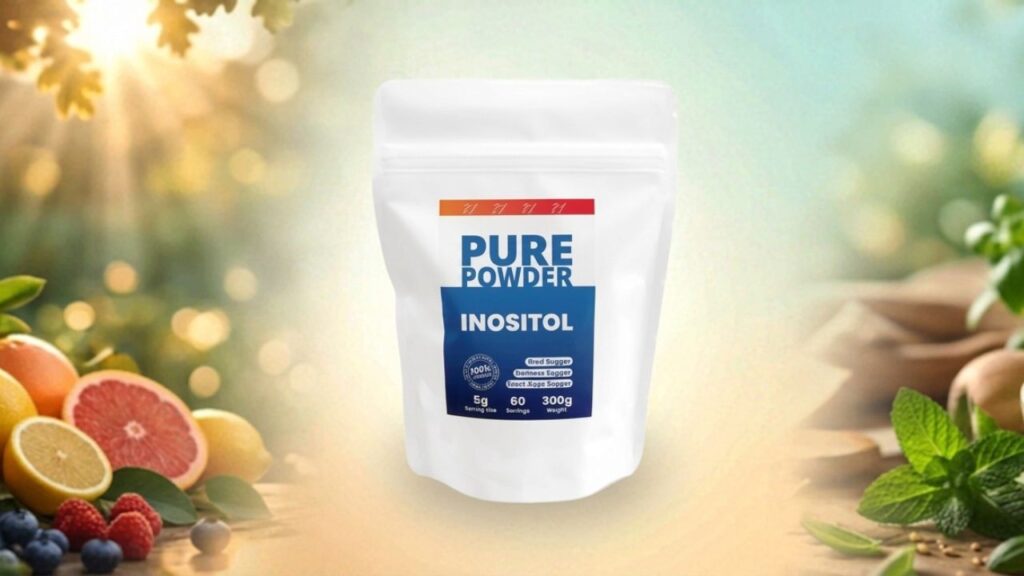
Pure Powder Inositol 300g
Most inositol products out there are:
* under-dosed (less than 1g per serving!),
* mixed with other substances,
* packed with fillers,
* inconvenient to swallow (many capsules) or
* child unfriendly (capsules)
* too expensive.
At Integrow Health, we decided to use a fresh approach.
Our popular Pure Powder range provides our customers access to single nutrients in a pure form. No additives whatsoever. This gives you full control over how much you add to your supplement routine. Also, powders are much cheaper to produce than other forms and we pass that cost saving on to you.
Kids love the taste.
The handy, stand-up pouches are easy to access and fully recyclable.
Our Pure Powder Inositol 300g provides 60 x 5g servings = enough for 2 months.
Manage your personal energy crisis and all the other crises become more manageable.
To your (energetic) health
The Team at Integrow Health

