

So you’ve hit menopause — congratulations! You’ve unlocked the Advanced Hormonal Chaos level of womanhood. Your hormones pack their bags, leave town, and text you a final “good luck lol.”
Back to (real) business.
During the past week, we men-tioned the M word more than once. Men-opause. We skirted around the topic of hormone replacement therapy (HRT) more than once. If you missed it, you can read about it here and here. Today, we’re grabbing the bull by the hormonal horns to deal with the touchy subject of HRT.
(As usual, nothing you read online should be construed as medical advice. This is for information purposes only.)
It strikes like lightning. One moment, you’re perfectly normal. The next, you’re in purgatory (or lower), often followed by a baptism of sweat. You forget why you walked into a room (or even which room you came from). Somebody pressed the Fast Forward button on the age button and you just googled, “How to fake your own death and move to a vineyard.” One moment, you’re a fairy godmother, the next you’re a witch. You feel like going on a diet of worms.
The rest of the world couldn’t care less. It’s infuriating to say the least.
Aaah. Your guy-necologist is sympathetic. Let’s sit closer and listen.
“Just take Hormone Replacement Therapy and everything will be back to normal.”
You slowly unclench your clammy hands from around his throat and hear yourself calmly say, “Just write that script and nobody will get hurt.”
“Ha! I got it nailed!” you think as you walk out the practice door.
A little patch here, a little pill there. It’s going to be alright. Everything is going to be alright. Doctor Google says so. Even Doctor Yahoo agrees. Good-bye Purgatory! Hello Paradise!
If it seems too good to be true, it probably is.
Let’s get real.
Anyone who tells you they can solve menopause is selling something.
HRT is known to increase the risk of various cancers, in particular breast and ovarian cancer. What they bicker about, is whether the increase in risk is ~20% or ~170%. Or maybe even more. It’s a devil’s bargain: Gimme your menopause and I will give you cancer (later on). You want the treat, but get tricked in the end.
Why does HRT cause cancer?
If you ever looked at a hormone plot of a fertile female over a month, it looks like Picasso on acid.
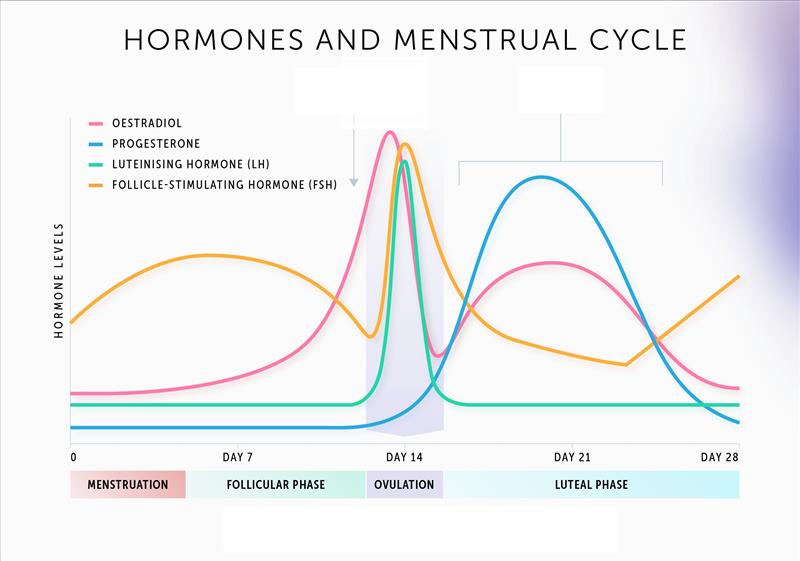
Why? What difference does it make? Stability would have been so much easier to handle.
Truth is, a woman’s hormones have one big purpose: Procreation. Falling pregnant, staying pregnant, breastfeeding. Rinse and repeat x 35 years.
There is a stage in a fertile woman’s life when hormones are reasonably stable: Pregnancy. This is when a lot of growth happens inside her body.
By giving a steady supply of hormones, a situation is created that enables unchecked tumour growth. Remember, estrogen is busy preparing the breasts for breastfeeding by rapid cell division of breast tissue. These levels of constantly high estrogen are only maintained for a couple of months. Then the baby is born and the levels drop rapidly.
HRT is constant – no variation. Join the dots. Cells are going to multiply.
The next nail in the HRT coffin is that synthetic hormones are used (since you cannot patent natural hormones). The body is not able to detoxify these as rapidly as it does with natural hormones. This leads to higher levels in breast and ovary tissue for longer.
What are the alternatives?
1. Lifestyle
Menopausal symptoms are largely due to increased acidity. To reverse this with lifestyle, stop smoking, drink little or no alcohol, do regular deep breathing exercises and don’t sit in front of the telly at night.
2. Exercise
Moderate exercise (like walking for 15-30 minutes per day) helps get blood flowing through the whole body. This means more oxygen and less inflammation.
3. Diet
Many studies have shown how a low-carb diet reduces menopausal symptoms. In particular, get rid of sugar in all its forms. Eating fruits is still OK, but other forms of sugar are not OK. Limiting grains and starches will reduce inflammation.
Drinking more water will also help with symptoms. Tea and coffee may also be of benefit, although coffee’s benefits are mostly from a morning cup. Drinking it later in the day may harm sleep.
Drinking alcohol makes things worse.
4. Minerals
Female hormone production relies on several key minerals, primarily zinc, magnesium, selenium, iodine, calcium, iron and manganese. These minerals function as cofactors for the enzymes involved in hormone synthesis. They also help regulate hormone activity and protect the reproductive system from oxidative stress.
5. Phyto-sterols and Phyto-estrogens
Combatting oxidative stress should be a cornerstone of any attempt to reduce menopausal symptoms. Plants provide a wide range of such substances. Some of the most potent of these resemble the chemical structure of female hormones and are called phyto-sterols and even phyto-estrogens (when they closely resemble estrogen).
Food sources include:
* Nuts & Seeds (flaxseed in particular)
* Fruits & Vegetables (especially legumes)
(Now you know what to do with all those leftover pumpkin seeds…)
Sadly, a great food source of phyto-estrogens, namely soy bean, has been compromised by being genetically modified. The result of genetic modification is that the plants are doused in RoundUp, which contaminates the final products. RoundUp is a known carcinogen and has many other toxic effects on the body.
Non-food sources of these molecules include:
* Red clover
* Alfalfa
* Chaste berry
* Grape seed extract
* Dong Quai
* Wild yam
* Licorice root
At Integrow Health, we focused on an extract made from eucalyptus bark which is very high in phyto-sterols and phyto-estrogens. It also happens to have four times the anti-oxidant power of grape seed extract, while costing a lot less. We call it “Eubex” for short. One capsule a day is sufficient for most indications, but it can safely be used in doses of 2 or 3 capsules daily.
The great thing about phyto-estrogens is that they actually have anti-cancer effects. If used consistently for long periods, rates of breast cancer come down.
6. Hormone Boosters
It is possible to boost the body’s ability to make its own sex hormones. This is perhaps the best way of doing it, since it leaves the body in control of deciding when what needs to be made, and when.
Here are some hormone boosters from the Integrow Health shelves:
* Mega D3
Chemically speaking, Vitamin D is a precursor for sex hormone production. By providing the body with enough building blocks, it becomes easier to make more hormones like estrogen and progesterone at the right time and in the right amounts.
* Cancer Bush (Sutherlandia)
Cancer Bush triggers the body to produce more sex hormones. Estrogen & progesterone in women and testosterone in men. The mechanism of action has not been studied, but the effects are clear for anyone who has ever used this amazing herb.
* Eterna
Like Vitamin D, Vitamin E is sex hormone precursor. In addition, it also has strong antioxidant benefits. There are 8 subtypes of Vitamin E. Of these, delta-tocotrienol is the most potent. This is the form of Vitamin E inside Eterna.
* Eterna GG
“GG” is short for “geranyl gernaiol”, a special substance that forms the base for a wide range of hormones and co-factors in the body. It helps with reducing oxidative stress and boosts production of the sex hormones.
7. Natural Hormone Replacement
Considering what we’ve said about HRT, is it safe to use natural hormone replacement?
The short answer is that natural hormones are safer than synthetic hormones, but the same caveat applies: Do not use these constantly or you may risk triggering cell division.
At Integrow Health, we supply two types of natural hormone replacement therapy:
* Natural Progesterone cream (20 ml)
This product provides 20 mg of natural progesterone per application. We recommend taking it for two weeks, then stopping for two weeks. If two weeks without progesterone gets too much, then try taking it for three weeks and resting for one week only. This is still safe. After all, 20 mg of progesterone is a relatively low dose. Apply the cream to the skin of your forearm or your chest.
* Trifecta Hormone Cream (20 ml)
Each application of our Trifecta Hormone Cream supplies:
Estrogen 8 mg
Progesterone 80 mg
Testosterone 8 mg
Our recommendation is to use this cream for two weeks, then rest for two weeks. It may also be used three weeks one, one week off.
The Trifecta Hormone Cream is suitable for women with complaints of hair loss and low libido, in addition to the usual menopausal complaints.
There you have 7 ways to reform those heretic hormones!
To your (reformed) health!
The Team at Integrow Health

