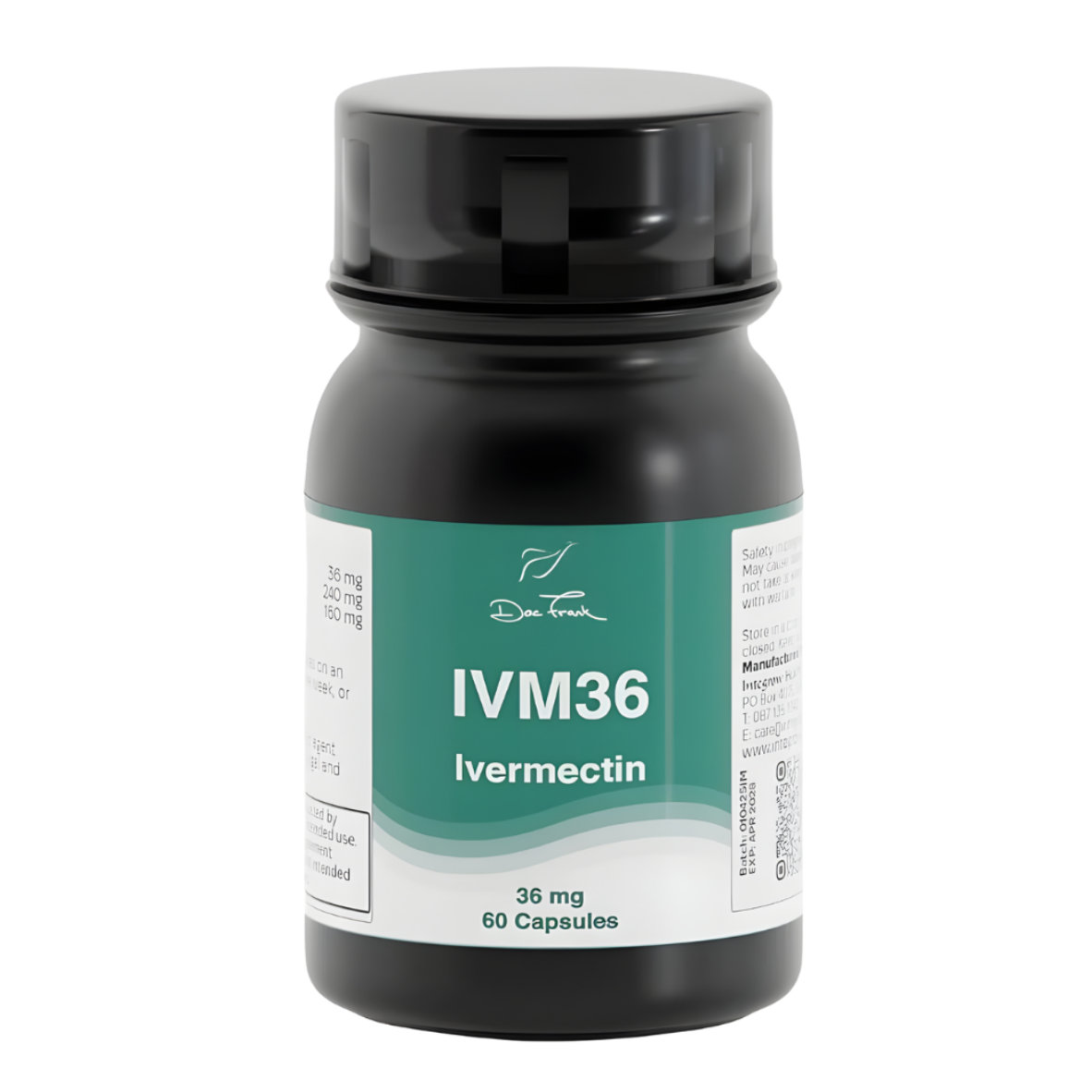
IVM 36 capsules contain 36 mg of high-quality Ivermectin per capsule. This dose equates to approximately 0.5 mg/kg for a standard adult, which is higher than the standard 200–400 µg/kg typically used for parasitic infections.
Studies have shown that the oral absorption and bioavailability of Ivermectin are significantly increased (by approximately 2.5 times) when administered with a high-fat meal compared to administration in a fasted state, as it is a lipophilic compound.
Ivermectin's primary mechanism involves selectively binding to glutamate-gated chloride ion channels found in the nerve and muscle cells of invertebrates (parasites). This action increases cell membrane permeability to chloride ions, causing paralysis and eventual death of the parasite.
The elimination half-life of Ivermectin is relatively long, approximately 18 to 38.9 hours. It is primarily metabolized in the liver by the cytochrome P450 (CYP) enzyme system, specifically CYP3A4. Ivermectin and its metabolites are almost exclusively excreted via the feces.
Ivermectin generally has low affinity and low permeability across a healthy BBB in mammals, due in part to the P-glycoprotein efflux pump actively transporting it out of the central nervous system. However, the barrier's integrity may be compromised by high doses, underlying inflammation, or co-administration with P-glycoprotein inhibitors, potentially allowing it to cross.
In vitro studies have indicated that Ivermectin may possess antiviral properties against various RNA viruses, including SARS-CoV-2. A proposed mechanism is its ability to interfere with the interaction between viral proteins and the host cell's nuclear transport proteins (importin-$alpha$/$beta$1), which is necessary for viral replication.
Research suggests Ivermectin may exhibit anti-inflammatory effects by modulating immune responses. Studies have indicated that it can inhibit the production of pro-inflammatory cytokines such as TNF-$alpha$, IL-6, and IL-1$beta$, and may influence pathways like the Toll-like receptor 4 (TLR4) signaling pathway.
Doc Frank has stated that IVM 36 is designed for cancer patients who may require higher doses, sometimes up to 2 mg/kg/day, based on certain protocols. Preclinical studies suggest Ivermectin may induce programmed cell death (apoptosis) and modulate signaling pathways in various cancer cell lines.
At higher dosages, side effects such as blurry vision and dizziness have been reported. Doc Frank's experience notes that if blurry vision occurs, it is typically restored once the drug is discontinued. Higher doses (up to 2 mg/kg) may be administered less frequently (e.g., once weekly) to minimize side effects.
Yes, Ivermectin is known to kill scabies, and topical Ivermectin 1% cream has been found effective and safe in the treatment of papulopustular rosacea, potentially by inhibiting gene expression related to inflammation.
While Ivermectin is effective for deworming, some practitioners, like Doc Frank, have indicated a preference for other agents, such as Fenbendazole, due to a potentially broader range of action and fewer reported side effects in some contexts.
Despite strong evidence of anti-cancer effects in preclinical models (in vitro and animal studies), robust clinical evidence from large-scale randomized controlled trials establishing Ivermectin as a proven standalone cancer treatment in humans is still limited.
Since Ivermectin is metabolized by the CYP3A4 enzyme, co-administration with strong inhibitors or inducers of this enzyme (e.g., certain statins, calcium channel blockers) could potentially alter the concentration of Ivermectin in the body. Consultation with a healthcare provider is advised, especially if on other medications.
Documents indicate that some individuals have followed the Front Line COVID-19 Critical Care Alliance (FLCCC) protocols for prevention and management of COVID-19, which historically advocated for the use of Ivermectin solution, with some users reporting positive results.
It is generally advised to consult a healthcare provider if pregnant or breastfeeding. Although some reports from mass treatment programs have not associated unintentional Ivermectin exposure with adverse pregnancy outcomes, specific comprehensive safety data for this population regarding long-term or high-dose use is limited. Ivermectin is considered poorly excreted into breast milk.
This statement means that IVM 36 has not been evaluated by SAHPRA (South African Health Products Regulatory Authority) for quality, safety, efficacy, or intended use, as it is marketed as a health supplement and not a registered medicine.
In cases of accidental intoxication or significant overdose, symptoms reported include rash, edema, headache, dizziness, asthenia, nausea, vomiting, diarrhea, seizure, ataxia, dyspnea, and in severe cases, neurotoxicity.
Studies suggest Ivermectin can modulate P2X4 receptors, which are part of the purinergic signaling pathway involved in inflammation and cancer cell survival. This mechanism has been explored for its potential to induce cell death (apoptosis) and affect the tumor microenvironment.
Some research suggests Ivermectin may introduce minor and temporary alterations to the gut microbial community. However, these changes have not been documented as significant enough to induce dysbiosis (severe imbalance) in healthy individuals.
Analysis of Ivermectin's use in mass administration programs for parasitic diseases, spanning over a decade, has reported a very low incidence of serious adverse side effects, indicating a generally favorable safety profile at established traditional doses.



Tenille P. –
Great value for money – please do yourselves a favor and research repurposed medicines. This product saves lives!
Karin V. –
Very convenient and available.
Beverley B. –
I was recommended to take this product by a Medical Practitioner to reduce the side effects of the COVID vaccines I had, 5 years ago. I do believe it will do the trick over time.
HELEN V. –
Yes I would highly recommend this product.
Inge C. –
Excellent company, excellent product. Always arrives within a few days
Johannie R. –
I am very impressed with this product. You don’t need a doctor’s prescription because it is all natural. The only suggestion I have is that the instructions for how often you can repeat the three-day course could be clearer. I took it for three days and was a little scared about side effects, but there were none. I did, though, have a lot more energy after I used the medicine. You can really feel the difference in your body.
Mpho M. –
Product came unexpectedly and before before the time I thought it would and Product is good
Louis M. –
Fast delivery. Much appreciated. Personalised note in the Comments section. Very sweet of you. Thanks.
Andrè K. –
Easy to take, surely making a difference in PSI count, down from 8.4 to 5.9, 72 mg per day
de B. –
Good efficient service all round, quick delivery. Product well packaged and appears to be of good quality. All tablets appear to be well pressed. Personally I would redo the artwork on the lables on the containers and relook at the content declaration size of font,it is rather small to read. l believe the print method to be flexographic but possibly using a better more updated printing machine would deliver better print results. This is noticeable on the vinettes design on the front panel as well as the crispness of the print.
Cindy V. –
This product keeps you healthy, I swear by this….I give it to everyone in my family and recommend this to all my friends. It is everything and more what everyone says about this. Also, thank you very much for fast and efficient service, the delivery was very quick after I ordered. I will order again!
Sara S. –
I have not used this particular product yet, but have used Ivermectin for viral infections and deworming over the last 4 years. I will not be withhout this product in my house.
Johan N. –
The delivery is fast and very organized. Thank you for that the product is very good does what it needs to.
Jane K. –
Extremely fast and impressive delivery. So far so good. Still new ..
Cindy V. –
Told all my friends about this, I order it for all of us, brilliant product, excellent service and speedy delivery! Due to this product I don’t get sick anymore, my immune system is much better and even my friends rave about this…..I will use this product forever!
Pieter S. –
Have not used yet but so far happy with the service received.
JENNIFER S. –
Convenient that it is 36mg. Great product.
Carla D. –
I’ve been having better sleep and less pain in my shoulder and neck from an old injury. Have bought again and will always keep stock at home.