Doc Frank's Mega D3 capsules contain a high potency of 40,000 IU (International Units) of Vitamin D3 (cholecalciferol) per capsule. The recommended dosage for this specific product is one capsule once weekly.
D-Ribose is included to enhance the absorption of Vitamin D3. It is claimed that D-Ribose enhances local ATP (adenosine triphosphate) production at the site where the Vitamin D3 is released from the capsule, and this ATP is used to increase D3 absorption.
Doc Frank offers two main alternatives to the weekly Mega D3 capsule:
- D3Light Drops: These provide 1,000 IU of Vitamin D3 per drop, allowing users to customize their exact daily dose by adding drops to food or taking them directly on the tongue.
- Daily D3Light Softgels: These provide 5,000 IU of Vitamin D3 per softgel for once-daily use, intended for strong immune, bone, and mood support.
The weekly dose of 40,000 IU averages out to approximately 5,714 IU per day. While this is considered a high-potency supplement, it is often aimed at correcting deficiencies or for specific health goals under guidance, as it is higher than the typical daily maintenance doses often recommended (e.g., 600–4,000 IU).
Yes, Magnesium is often recommended alongside high-dose Vitamin D. Doc Frank sometimes recommends MgO (Magnesium Oxide) at 240 mg per capsule, taken once daily, because magnesium is an essential cofactor required for the activation and metabolism of Vitamin D in the body.
Documents suggest that the dosage of Vitamin D3 should be doubled if blood levels are lower than 40 ng/ml. For example, a user with a blood result of 19.0 ng/ml might be advised to take two 40,000 IU capsules per week instead of one.
Scientific evidence generally indicates that Vitamin D3 (cholecalciferol) is more effective than Vitamin D2 in raising and maintaining serum 25-hydroxyvitamin D [25(OH)D] levels for longer durations, which is why it is the preferred form used in Doc Frank’s products.
Mega D3 and related products are marketed for broad support, including Immunity, Bone Health, Brain Health, Mood, Anxiety, and Heart Health.
Vitamin D toxicity (hypervitaminosis D) is rare but possible, typically resulting from prolonged intake exceeding 10,000 IU per day. Toxicity is primarily caused by hypercalcemia (excessive blood calcium). Symptoms include nausea, vomiting, weakness, frequent urination, and potential kidney problems.
For daily doses of 25,000 IU or more, some protocols insist on checking Serum 25-OH-D, corrected calcium, eGFR (estimated glomerular filtration rate), and PTH (parathyroid hormone), with 25-OH-D levels repeated at 8 weeks.
Vitamin D3 acts as an immunomodulator. Immune cells (macrophages, T and B lymphocytes) possess Vitamin D Receptors (VDRs). When activated, D3 regulates the production of antimicrobial peptides (like cathelicidin) and helps reduce excessive inflammation by modulating cytokine production.
Doc Frank's perspective is that 1,000 IU per capsule is "far too low to provide any notable effects," and suggests taking at least five of these daily to get "any real benefit," supporting the rationale for the higher Mega D3 dosage.
For oncology patients, the target range is noted as 150–200 nmol/L (≈ 60–80 ng/mL). The general "ordinary wellness" range is cited as 100–150 nmol/L.
Documents flag interactions with certain medications: thiazide diuretics (due to hypercalcemia risk) and digoxin (risk of enhanced toxicity).
Vitamin D receptors are found on pancreatic beta cells. Vitamin D is believed to help improve insulin sensitivity and enhance insulin secretion, thereby playing a supportive role in glucose metabolism.
D3Light Drops can be added to food or dropped straight on the tongue, offering maximum flexibility for daily dosing.
While high-dose Vitamin D (like Mega D3) is foundational, other supplements (like Brain-Mag) are often the "next step" for "increased focus and attention," also as Vitamin D3 works synergistically to support cognitive functions.
No, Mega D3 should be continued up to and including the day of the procedure.
Yes, Vitamin D3 plays a role in muscle function and strength. Supplementation has been shown to improve muscle strength, balance, and reduce the risk of falls, particularly in individuals who are deficient.
The shelf life printed on the 50,000 IU blister strips is quoted as 36 months from manufacture.
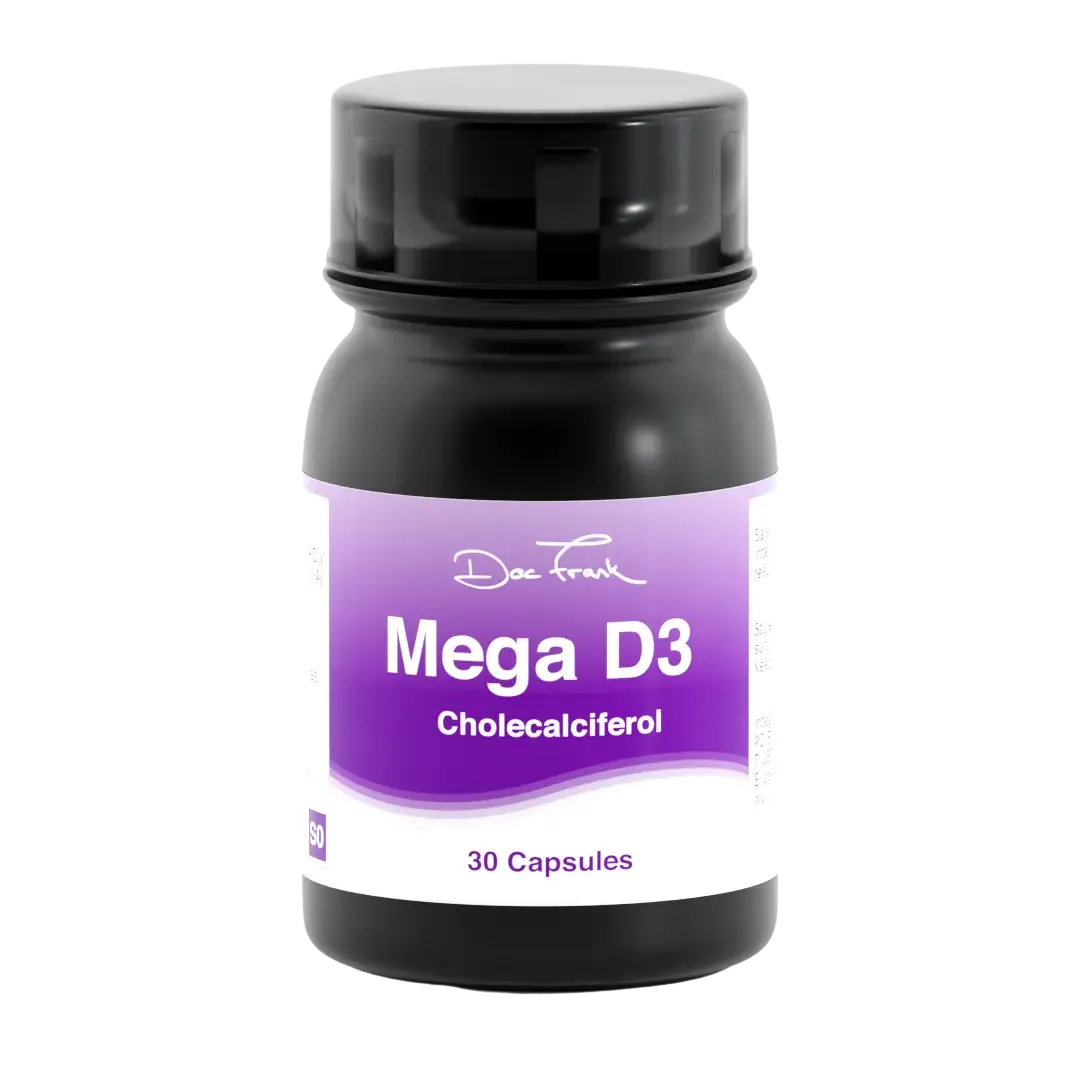


Super convenient pill.
Im sure I’ll benefit healthely.
Really helps support my immunity and overall vitality.